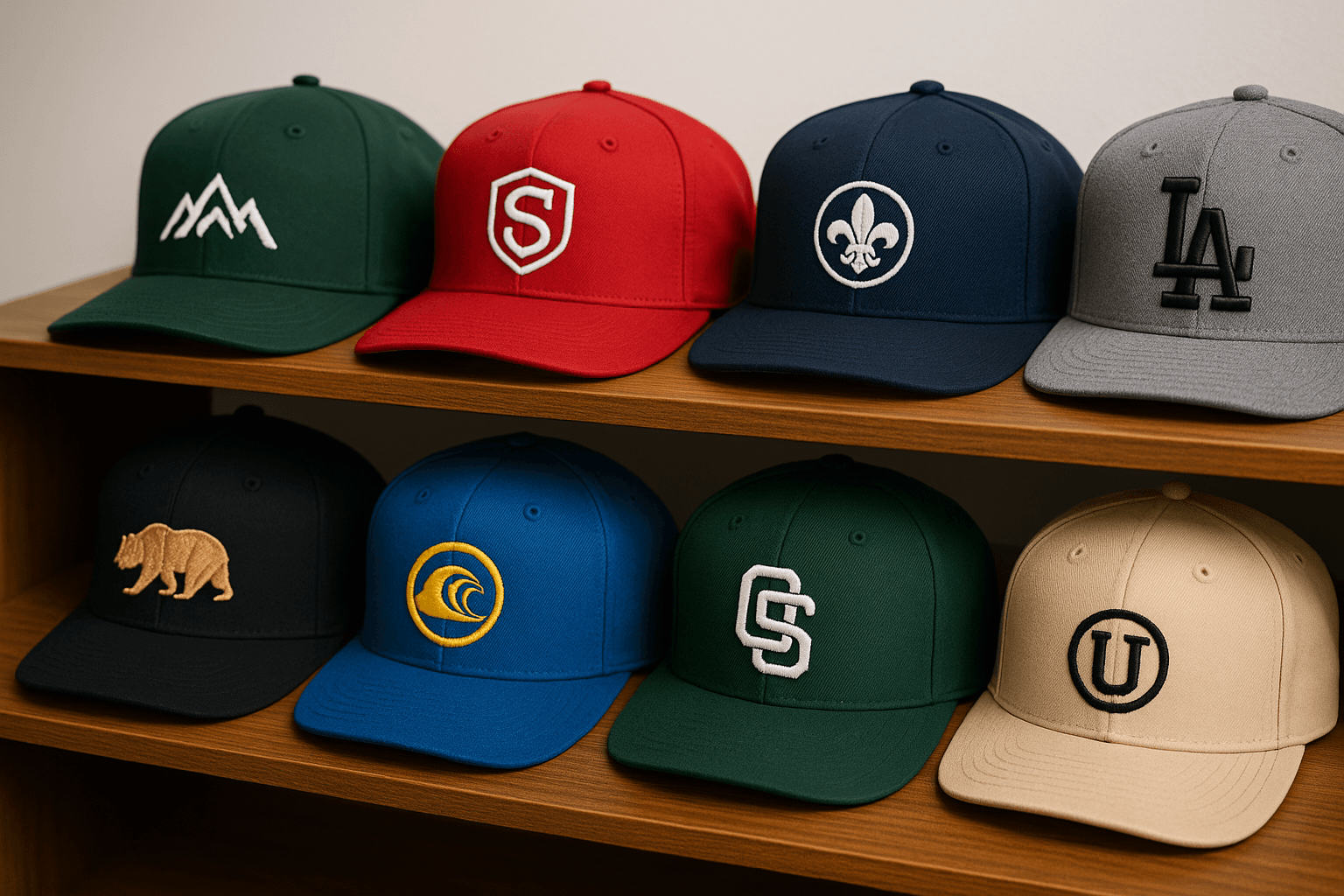
Embroidering hats requires specific features that not every machine offers. The curved surface of a cap demands a specialized cap frame or hoop, and the machine needs enough clearance and the right arm design to handle it. Here are the best machines for hat embroidery available on Amazon in 2026.
Quick Comparison: Best Embroidery Machines for Hats
| Machine | Needles | Cap Frame | Max Cap Area | Speed (SPM) | Price Range | Our Rating |
|---|---|---|---|---|---|---|
| Ricoma EM-1010 | 10 | Included | 2.5×6 in | 1200 | $$$ | 9.3/10 |
| Janome MB-7 | 7 | Included | 2.4×5.5 in | 800 | $$$$ | 9.0/10 |
| Brother PE900 + cap frame | 1 | Sold separately | 2.5×4 in | 710 | $$ | 8.0/10 |
| Brother SE700 + cap frame | 1 | Sold separately | 2.5×4 in | 710 | $$ | 7.8/10 |
1. Ricoma EM-1010 – Best Overall for Hat Embroidery
The Ricoma EM-1010 is our top pick for hat embroidery businesses. Ten needles mean you load your thread colors once and the machine handles color changes automatically. The included cap frame is well-designed and holds caps securely. At 1200 stitches per minute, it is one of the fastest machines in its class.
Why it wins for hats: The combination of multi-needle speed, included cap frame, generous cap embroidery area (2.5×6 inches), and competitive pricing makes it the best value for a hat embroidery business. Most custom cap shops in this price range use Ricoma or similar multi-needle machines.
Realistic output: Expect 15-25 embroidered caps per day depending on design complexity. A typical front-of-cap logo takes 8-15 minutes to stitch.
Check Current Ricoma EM-1010 Price at Amazon
2. Janome MB-7 – Best for Premium Hat Quality
Seven needles is fewer than the Ricoma, but the Janome MB-7 compensates with excellent stitch quality and Janome’s legendary build durability. The cap frame is solid, and the machine handles the curved surface reliably. If your hat business prioritizes stitch quality over raw speed, the MB-7 delivers results that clients notice.
Why it wins for quality: Janome’s stitch precision is a step above on detailed logo work. If you embroider fine text or complex multi-color logos on caps, the MB-7 produces cleaner results than most competitors.
Best for: Growing businesses that want commercial quality, especially for detailed or premium hat orders where stitch precision matters most.
Check Janome MB-7 Price at Amazon
3. Brother PE900 + Cap Frame – Best Budget Hat Setup
If you already own a PE900 or are looking for the most affordable entry into hat embroidery, the optional cap frame accessory (sold separately for about $100-150) turns this home machine into a capable cap embroiderer. The cap area is smaller at 2.5×4 inches and you will need to change thread colors manually, but for testing the market before investing in a multi-needle machine, it works. Prefer a complete setup? The PE900 bundle comes with threads and accessories — worth checking if you want to skip a separate supply order.
Best for: Testing whether hat embroidery is viable for your business before investing $3,000+ in a multi-needle machine.
Watch out for: Single-needle hat embroidery is slow. A 6-color cap logo that takes 10 minutes on a Ricoma EM-1010 might take 25-30 minutes on a PE900 with manual thread changes. Fine for personal use or small orders, but not scalable.
Check Current Brother PE900 Price on Amazon
4. Brother SE700 + Cap Frame – Best Budget Combo for Hats
Similar to the PE900 setup but with the added benefit of full sewing capability. If you want one machine that handles hats, flat embroidery, and regular sewing, the SE700 with a cap frame accessory covers all three. The 5×7 inch flat embroidery area is also useful for embroidering other products alongside caps. Need everything out of the box? The SE700 bundle pairs the machine with thread, hoops, and accessories so you can start stitching the same day.
Best for: Side hustlers who want to offer hats alongside other embroidered products without buying multiple machines.
Check Current Brother SE700 Price on Amazon
What to Know About Hat Embroidery
Cap frames are essential. You cannot embroider a hat in a regular flat hoop. Cap frames hold the curved front panel taut and flat so the needle can stitch accurately. Multi-needle machines like the Ricoma and Janome include a cap frame. Single-needle Brother machines require purchasing one separately for $100-150.
Design placement is critical. Unlike flat items where you have margin for error, hats show every millimeter of misalignment. Center your design carefully and use the alignment features your machine offers.
Structured vs unstructured caps behave differently. Structured caps (with a stiff front panel) are easier to embroider and give cleaner results. Unstructured caps (soft, floppy front) require more stabilizer and slower stitching to prevent puckering.
Back-of-cap embroidery is tricky. Not all machines handle the back panel well. If back-of-cap designs are important to your business, test this specifically before buying.
Hat Embroidery Machine Specs Comparison
| Feature | Ricoma EM-1010 | Janome MB-7 | Brother PE900 | Brother SE700 |
|---|---|---|---|---|
| Needles | 10 | 7 | 1 | 1 |
| Cap frame included | Yes | Yes | No (~$150) | No (~$150) |
| Cap embroidery area | 2.5×6 in | 2.4×5.5 in | 2.5×4 in | 2.5×4 in |
| Max flat area | 12×8 in | 9.4×7.9 in | 5×7 in | 5×7 in |
| Speed (SPM) | 1200 | 800 | 710 | 710 |
| Also sews | No | No | No | Yes |
Starting a Hat Embroidery Business
Custom embroidered hats are one of the most profitable embroidery niches. Here is what a typical startup looks like:
- Machine: $2,000-$5,000 for a multi-needle with cap frame
- Blank caps: $3-8 each wholesale (Richardson, Flexfit, Yupoong are popular brands)
- Thread and supplies: $200-$400 initial stock
- Digitizing: $15-50 per design if outsourcing, or $500-$2,000 for software to do it yourself
- Selling price: $20-45 per custom cap depending on quantity and complexity
- Profit margin: 50-70 percent after materials on most orders
- Embroidery machine maintenance checklist
- Embroidery machine setup checklist
- Common stabilizer mistakes to avoid
- Fixing thread tension problems
- How to price custom embroidery
- Why embroidery thread keeps breaking
At 15-25 caps per day capacity with a multi-needle machine, a one-person hat embroidery operation can generate $2,000-5,000 per month in revenue once orders are consistent.
Related guides: Best Embroidery Machine 2026 | Best Commercial Machine | How to Start an Embroidery Business