
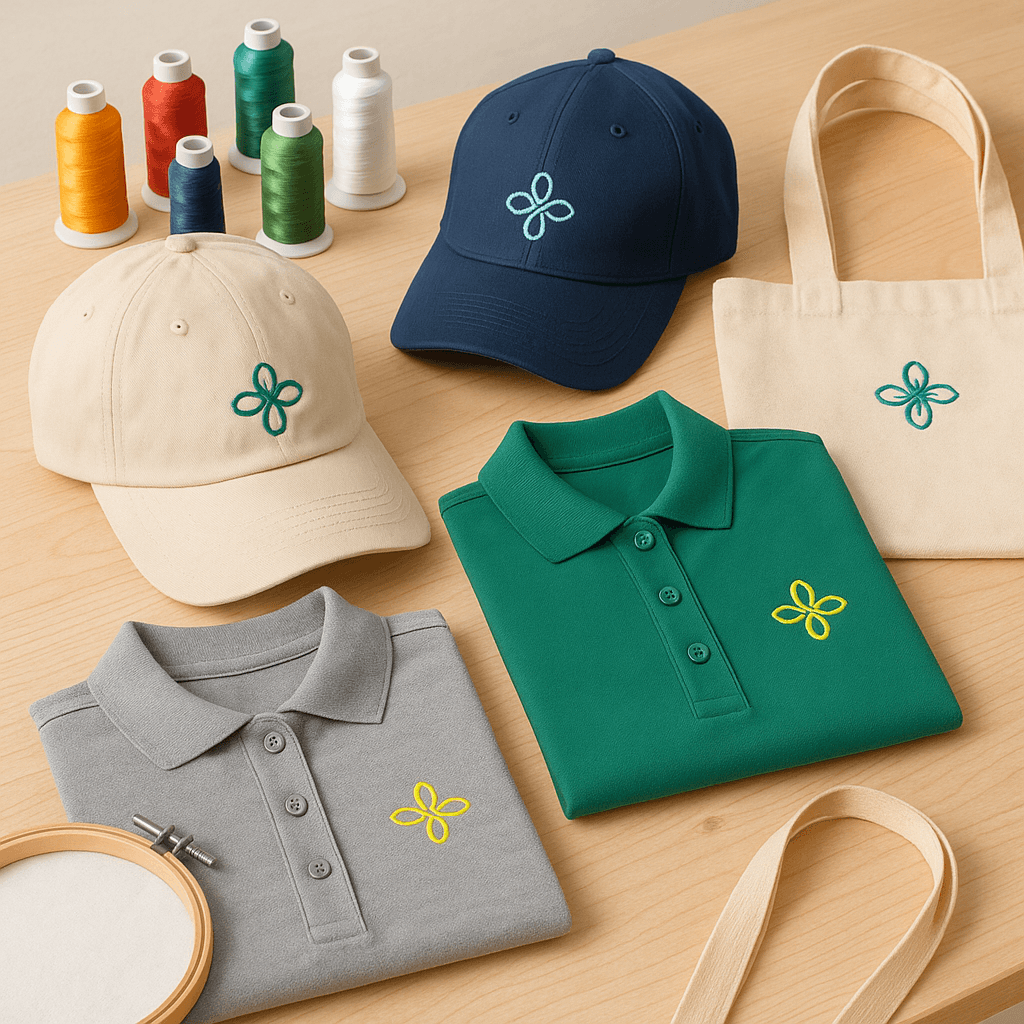
Starting an embroidery business is one of the most accessible ways to build a profitable craft-based business from home. The startup costs are manageable, the demand for custom embroidered products is strong, and you can start selling within weeks of getting your machine. Here is a practical, step-by-step guide.
Step 1: Choose Your Machine
Your machine choice depends on your budget and ambition level. Here is a realistic breakdown:
| Budget | Machine | Best For | Monthly Capacity |
|---|---|---|---|
| Around $500 | Brother PE535 | Testing the market, side hustle | 50-100 items |
| $550-$1400 | Brother PE900 / SE700 | Serious side business | 100-200 items |
| $4,999-$10,000+ | Ricoma EM-1010 / Janome MB-7 | Full-time business | 300-600 items |
Our recommendation: Start with a starter machine around $500. Prove the business works before investing in expensive equipment. Many successful embroidery business owners started with a PE535 and upgraded after their first $2,000 in revenue.
Also consider the Brother PE545: the WiFi-enabled version of the PE535. See the PE545 vs PE535 comparison for the full breakdown. If you want everything ready to go, the PE545 bundle includes the machine plus 4 embroidery hoops, 40 spools of thread, and 230+ accessories.
Step 2: Pick Your Niche
The embroidery market is broad. Picking a niche helps you stand out and target customers effectively.
Most profitable embroidery niches:
- Custom caps and hats – High margin, steady demand. See our hat embroidery machine guide.
- Baby and children items – Personalized onesies, bibs, blankets. Gift market is huge.
- Corporate and team wear – Logos on polos, jackets, and uniforms. Repeat business potential.
- Wedding and events – Monogrammed robes, handkerchiefs, gifts. High willingness to pay.
- Pet products – Embroidered bandanas, beds, and collars. Growing market.
- Patches and badges – Low material cost, high perceived value.
- Embroidery machine maintenance checklist
- Embroidery machine setup checklist
- Common stabilizer mistakes to avoid
- Fixing thread tension problems
- How to price custom embroidery
- Why embroidery thread keeps breaking
Step 3: Set Up Your Workspace
You do not need a dedicated studio. A spare room, garage corner, or even a large closet works for a home embroidery setup. You need:
- A sturdy table or desk (machine vibrates at speed)
- Good overhead lighting
- Thread storage (wall rack or drawer organizer)
- Stabilizer and blank product storage
- A computer or tablet for design transfer
Step 4: Build Your Supply Kit
| Supply | Estimated Cost | Notes |
|---|---|---|
| Embroidery thread set | $80-$200 | 40-60 color set covers most projects |
| Bobbins | $15-$30 | Pre-wound save time |
| Stabilizer variety pack | $30-$60 | Tear-away, cut-away, water-soluble |
| Needles | $10-$20 | 75/11 for most fabrics |
| Blank products (initial stock) | $100-$300 | Caps, shirts, towels, bags |
| Scissors and tools | $20-$40 | Thread snips, seam ripper, tweezers |
Total startup supply cost: $255-$650 (plus the machine itself)
Step 5: Learn Digitizing (or Outsource It)
Digitizing is the process of converting artwork into embroidery machine instructions. This is the most technically demanding part of the business.
Option A: Outsource digitizing. Services like Fiverr and specialized digitizing companies charge $15-$50 per design. This is the fastest way to start. Many successful businesses outsource all digitizing.
Option B: Learn to digitize yourself. Software like Hatch by Wilcom ($500-$1,000) or Ink/Stitch (free, open-source) lets you create your own designs. The learning curve is 2-3 months to produce clean results. Long-term, this saves money and gives you creative control.
Step 6: Set Your Pricing
Pricing custom embroidery is based on stitch count, not time. Here are typical market rates:
| Product | Typical Price | Material Cost | Profit Margin |
|---|---|---|---|
| Embroidered cap | $20-$35 | $5-$10 | 60-75% |
| Monogrammed towel | $15-$25 | $4-$8 | 65-75% |
| Custom polo (logo) | $25-$45 | $8-$15 | 55-70% |
| Embroidered patch | $8-$15 | $1-$3 | 75-85% |
| Baby onesie (name) | $18-$28 | $5-$8 | 65-75% |
Step 7: Start Selling
The fastest channels to start getting sales:
- Etsy – Lowest barrier to entry. List custom embroidery services and personalized products. Great for baby items, wedding gifts, and patches.
- Local craft fairs and markets – Bring samples and take custom orders on the spot. Face-to-face selling builds trust fast.
- Facebook Marketplace and local groups – Post in local buy/sell groups. Custom embroidery sells well locally.
- Instagram – Post your best work consistently. Use hashtags like #customembroidery and #embroideredhats. Tag local businesses.
- Direct to local businesses – Walk into local restaurants, gyms, teams, and offer sample embroidered items. Corporate accounts are the most profitable long-term revenue.
Realistic Revenue Timeline
| Timeline | Revenue Estimate | What to Expect |
|---|---|---|
| Month 1-2 | $0-$200 | Learning, practicing, building samples |
| Month 3-4 | $200-$800 | First sales, refining process |
| Month 5-8 | $500-$2,000 | Regular orders, repeat customers starting |
| Month 9-12 | $1,000-$4,000 | Established presence, word of mouth growing |
| Year 2+ | $2,000-$8,000+ | Scaling with better equipment and corporate accounts |
These numbers assume part-time effort (15-25 hours per week). Full-time operators with multi-needle machines and corporate accounts can exceed $10,000 per month.
Common Mistakes to Avoid
- Buying too much equipment upfront. Start small. Upgrade when revenue justifies it.
- Underpricing. Custom embroidery is skilled work. Charge what it is worth.
- Skipping stabilizer. Every fabric needs proper stabilizer. Skipping it ruins projects.
- Not building an email list. Collect customer emails from day one. Repeat customers are your most profitable segment.
- Trying to serve everyone. Pick a niche and dominate it before expanding.
Related guides: Best Machine for Beginners | Best Budget Embroidery Machine | Best for Hats | Best Commercial Machine