
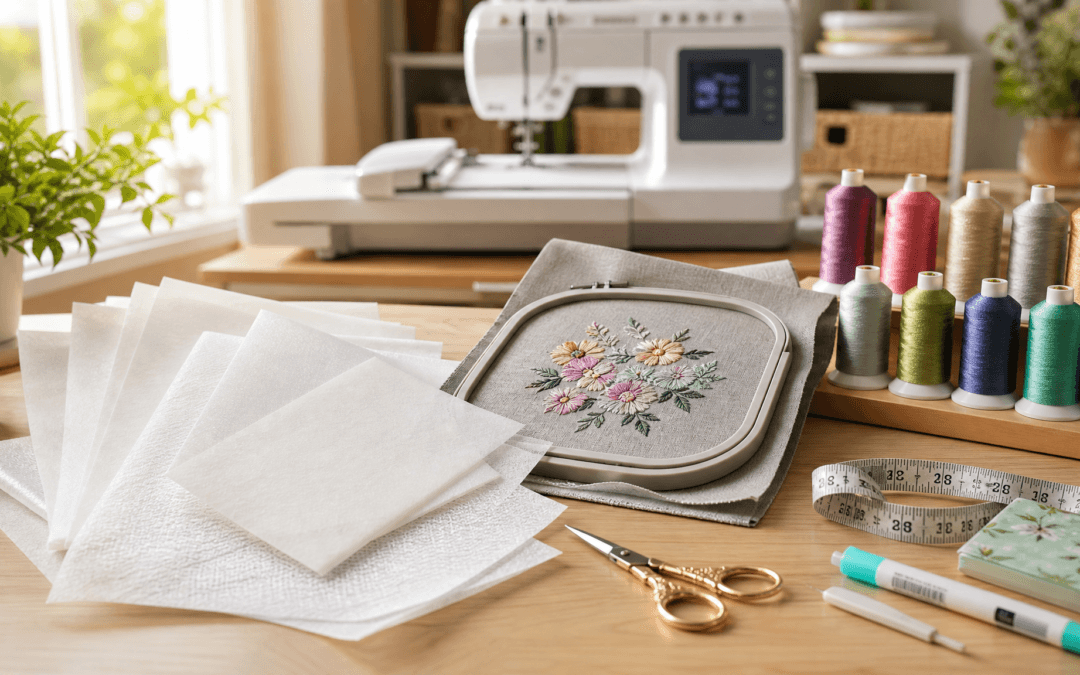
Choosing the right needle and knowing when to replace it are essential skills for anyone starting with embroidery machines. This embroidery machine needle guide will help beginners understand needle sizes, when to change needles, how to match needles to different fabrics, and how to recognize symptoms of a dull or incorrect needle. Proper needle care ensures smooth stitching, reduces thread breaks, and protects your fabric and machine.
Understanding Embroidery Machine Needle Sizes
Embroidery machine needles come in various sizes, typically indicated by two numbers such as 75/11 or 90/14. The first number is the European metric size, and the second is the American size. The size refers to the needle’s diameter and affects how it interacts with fabric and thread.
Smaller needles (like 60/8 or 75/11) have a finer point and are suitable for lightweight or delicate fabrics such as silk or organza. Larger needles (like 90/14 or 100/16) are thicker and better for heavier fabrics like denim or canvas.
Choosing the correct needle size helps prevent fabric damage and thread breakage. Using a needle that is too large for the fabric can leave noticeable holes or cause puckering, while a needle that is too small may bend or break easily.
When to Replace Your Embroidery Machine Needle
Needles wear out with use, even if they don’t visibly look damaged. A good rule of thumb is to replace your needle after every 8 to 10 hours of embroidery or after completing a project. Frequent needle changes help maintain stitch quality and reduce the risk of thread breaks or fabric damage.
Also, replace the needle immediately if you notice any of the following symptoms:
- Skipped stitches or uneven stitching
- Frequent thread breaks
- Visible burrs or bends on the needle
- Fabric damage such as snags or holes
Keeping spare needles on hand is a good practice, so you can quickly swap them out when needed.
Matching Needles to Fabric Types
Different fabrics require different needle types and sizes to achieve the best embroidery results. Here are some common fabric types and needle recommendations:
- Lightweight fabrics (silk, chiffon, organza): Use a fine needle size such as 60/8 or 70/10 with a sharp point to avoid damaging the delicate fibers.
- Medium-weight fabrics (cotton, linen): A 75/11 or 80/12 needle usually works well, providing a balance between strength and delicacy.
- Heavy fabrics (denim, canvas, upholstery): Use a larger needle size such as 90/14 or 100/16 with a strong, sharp point to penetrate thick material.
- Knit or stretch fabrics: Ballpoint needles are preferred because their rounded tip slides between fibers without cutting them, preventing runs or holes.
Always test your needle and thread combination on a fabric scrap before starting your main project to ensure smooth stitching.
Symptoms of a Dull or Wrong Needle
Using a dull or incorrect needle can cause multiple issues during embroidery. Watch for these signs:
- Thread Breakage: A dull needle can have burrs that cut the thread repeatedly.
- Skipped Stitches: If the needle is bent or the wrong size, the machine may miss stitches.
- Fabric Damage: Holes, snags, or puckering indicate the needle is too large or dull.
- Unusual Noise or Vibration: A bent or damaged needle can cause the machine to vibrate or make clicking sounds.
If you notice any of these, stop stitching and inspect the needle. Replace it if necessary to avoid further damage.
How to Properly Replace Your Embroidery Needle
Replacing your embroidery machine needle is straightforward but requires care to avoid injury or machine damage:
- Turn off your embroidery machine and unplug it for safety.
- Raise the needle to its highest position using the handwheel.
- Loosen the needle clamp screw and carefully remove the old needle.
- Insert the new needle with the flat side facing the correct direction (usually the back or left, depending on your machine).
- Push the needle up as far as it will go into the clamp.
- Tighten the needle clamp screw securely.
- Run a test stitch on a fabric scrap to confirm proper installation.
Maintaining Needle Performance for Better Embroidery
In addition to timely replacement, maintaining your needles can improve embroidery quality:
- Use high-quality needles: Cheaper needles may have inconsistencies that affect stitching.
- Store needles properly: Keep them in a dry, clean container to avoid rust or damage.
- Match needle and thread: Using the right needle size for your thread thickness prevents unnecessary stress on the needle.
- Regularly clean your machine: Lint buildup can affect needle performance and thread tension.