
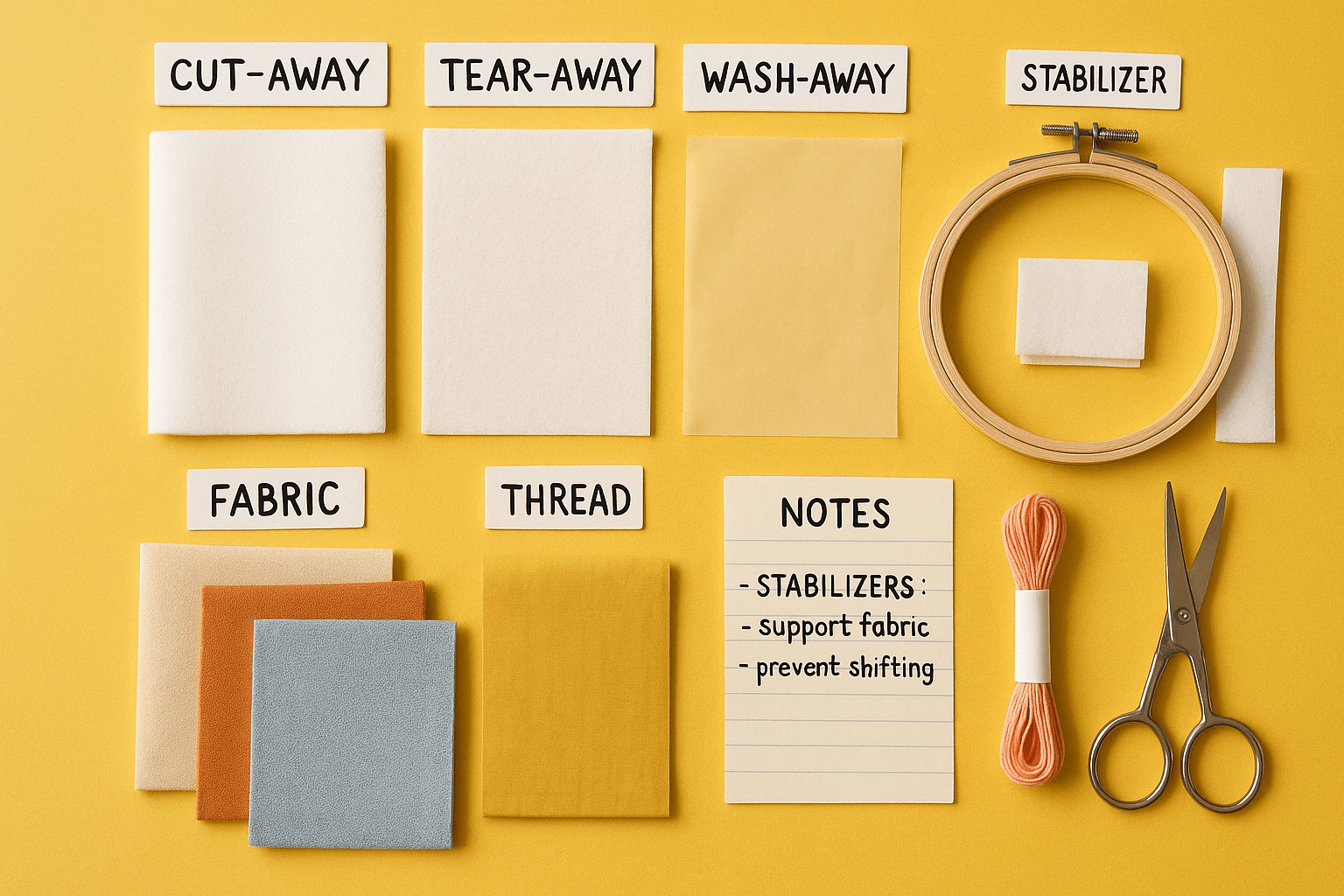
If your embroidery is puckering, shifting, stretching, or sinking into the fabric, stabilizer is almost always the problem. The right stabilizer is the difference between clean professional results and disappointing output, regardless of how good your machine is.
This guide covers which stabilizer to use for every common fabric type, how to choose between cut-away and tear-away, and the mistakes that ruin the most projects.
Quick Reference: Stabilizer by Fabric Type
| Fabric | Stabilizer Type | Weight | Topper Needed? | Notes |
|---|---|---|---|---|
| Cotton t-shirts | Cut-away | Medium (2.0 oz) | No | Cut-away prevents stretching over time |
| Knit/stretchy fabrics | Cut-away | Medium-heavy | No | Never use tear-away on knits |
| Denim | Tear-away | Medium-heavy | No | Dense enough to support itself |
| Canvas/duck cloth | Tear-away | Medium | No | Stiff fabrics need less support |
| Towels/terry cloth | Tear-away | Heavy | Yes (water-soluble) | Topper prevents stitches sinking into loops |
| Fleece | Cut-away | Medium | Yes (water-soluble) | Topper keeps nap out of stitches |
| Caps/hats | Cut-away (cap backing) | Heavy | Optional | Use cap-specific backing for best results |
| Silk/satin | Cut-away | Light (1.5 oz) | No | Reduce density, use sharp needles |
| Organza/sheer | Water-soluble | N/A | Yes (both sides) | Dissolves completely after stitching |
| Leather/faux leather | Tear-away | Medium | No | Do not hoop — use adhesive stabilizer instead |
| Nylon (jackets) | Cut-away | Medium | No | Slippery — use adhesive or spray adhesive |
| Baby blankets (minky) | Cut-away | Heavy | Yes (water-soluble) | Float the hoop — do not compress the pile |
Cut-Away vs Tear-Away: When to Use Each
Cut-Away Stabilizer
What it does: Stays permanently behind the embroidery. You cut away the excess with scissors after stitching, leaving a backing behind the design that prevents stretching and distortion over time.
Use it on: Any fabric that stretches, drapes, or is soft. Knits, t-shirts, fleece, baby blankets, polo shirts, and most wearable garments.
Why it matters: Tear-away on stretchy fabric is the number one beginner mistake. The embroidery looks fine immediately after stitching, but after a few washes the fabric stretches and the design puckers because the stabilizer is gone.
Tear-Away Stabilizer
What it does: Tears away cleanly after stitching, leaving no backing behind the design. Best for fabrics stable enough to hold embroidery on their own.
Use it on: Woven fabrics that do not stretch: denim, canvas, quilting cotton, linen, and most structured fabrics.
Why it matters: On stable fabrics, leftover stabilizer behind the design is unnecessary and can feel stiff. Tear-away gives you clean results without residue.
Water-Soluble Stabilizer (Topper)
What it does: Dissolves completely in water after stitching. Used on top of textured fabrics to prevent stitches from sinking into the fabric surface.
Use it on: Towels, fleece, velvet, minky, and any fabric with a nap or pile. Place it on top of the fabric before stitching — the stitches go through it and sit cleanly on the surface instead of disappearing into the texture.
Common Stabilizer Mistakes
1. Using the Same Stabilizer for Everything
This is the most common mistake. A medium cut-away works for t-shirts but is wrong for towels, wrong for denim, and wrong for delicate fabrics. Each fabric type has specific needs. Matching the right stabilizer to the fabric is a skill that separates amateur results from professional quality.
2. Using Tear-Away on Stretchy Fabric
The embroidery looks great right off the machine. Then the customer washes it twice and the design puckers because the fabric stretched but the stitches did not. Always use cut-away on knits and stretchy materials.
3. Skipping the Topper on Towels
Without a water-soluble topper, embroidery on terry cloth sinks into the loops and looks fuzzy and undefined. The topper adds five seconds of setup time and makes the difference between professional and amateur results.
4. Using Stabilizer That Is Too Light
If the fabric moves during stitching, the stabilizer is not heavy enough. Dense designs on soft fabrics need heavier stabilizer. When in doubt, go one weight heavier rather than lighter.
5. Not Testing First
Before embroidering a customer’s $15 blank, test the stabilizer and design combination on a scrap piece of the same fabric. This takes 5 minutes and saves $15 in wasted blanks.
Recommended Stabilizer Brands
- Sulky: Excellent quality, widely available. Their cut-away and tear-away are industry standards.
- Floriani: Premium quality with consistent weight. More expensive but very reliable.
- Pellon: Good quality at a lower price point. Great for beginners building their supply kit.
- Madeira: Professional-grade stabilizer used in commercial shops.
Starter Kit Recommendation
If you are just getting started, buy these three types and you will cover 90% of projects:
- Medium cut-away (2.0 oz): For t-shirts, knits, and most garments
- Medium tear-away: For denim, canvas, and woven fabrics
- Water-soluble topper: For towels, fleece, and textured fabrics
Total cost for a starter set: $30-$60 depending on brand and quantity.
Related guides: Best Machine for Beginners | Best for Hats | Start an Embroidery Business | Embroidery Pricing Guide