
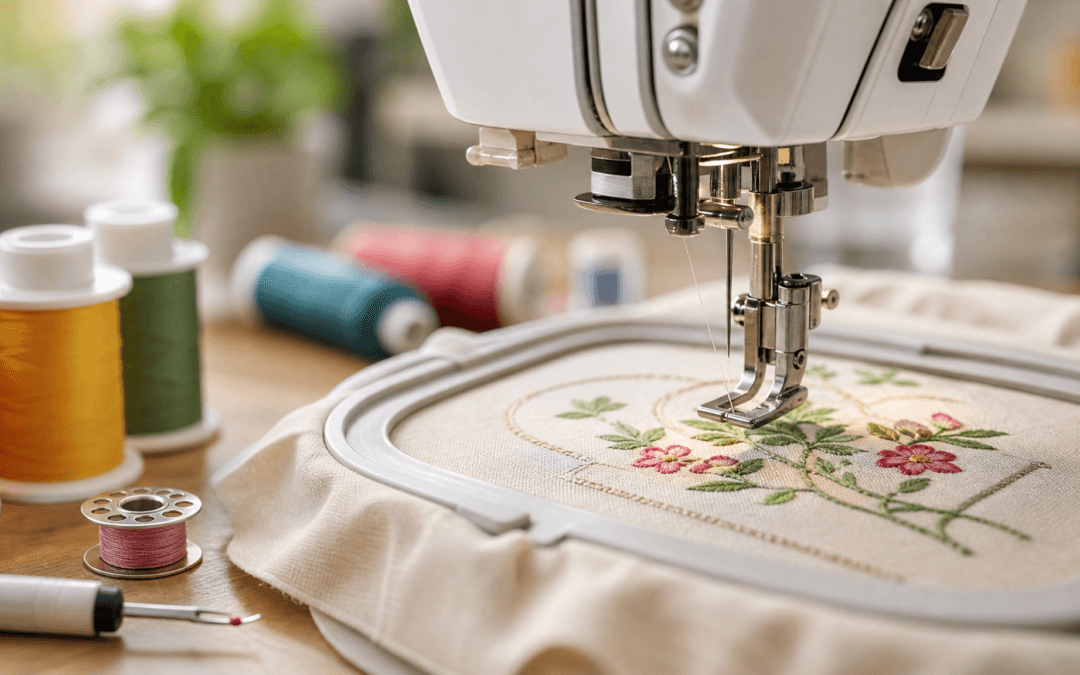
Bobbin thread problems are the most frustrating part of learning machine embroidery. The design looks perfect on screen, but underneath the hoop, thread piles into a knot or the bobbin thread keeps peeking through the top. These problems are almost always fixable without a repair trip. Here is exactly what causes each common bobbin issue and how to fix it.
1. Bird Nesting (Thread Bunching Under the Fabric)
Bird nesting happens when dozens of thread loops pile up underneath the fabric in a tangled ball. The machine keeps stitching but the bobbin thread is not forming proper stitches. This is the most common panic-inducing issue for beginners.
Why It Happens
The top thread is not being pulled down correctly by the bobbin hook. This usually means the top thread slipped out of the take-up lever, the needle is unthreaded, or the bobbin is not seated properly. Dirty bobbin cases and incorrect bobbin direction also cause it.
Fix It
- Stop immediately. Do not keep stitching. The more it nests, the harder it is to clean up.
- Cut the threads, remove the hoop, and carefully trim away the nest with small scissors.
- Rethread the top thread completely — make sure the presser foot is up so the thread seats in the tension discs.
- Confirm the thread is in the take-up lever. Missing the take-up lever is the #1 cause of bird nesting.
- Check that the bobbin is inserted in the correct direction (most machines want the thread unwinding counterclockwise).
- Brush lint out of the bobbin case area. Lint buildup can prevent the hook from catching properly.
- Try a new needle. A slightly bent needle that still looks fine to the eye can cause nesting.
2. Bobbin Thread Showing on Top
When white or light bobbin thread dots the top of a dark design, the tension balance is off. The top tension is pulling too hard or the bobbin tension is too loose.
Fix It
- Lower the top thread tension one number at a time and test stitch. Small adjustments make a big difference.
- If lowering top tension does not help, tighten the bobbin case screw very slightly — no more than a quarter turn.
- Check that the bobbin thread is feeding smoothly. Thread that is wound unevenly or loosely on the bobbin spool will pull inconsistently.
- Always use the same weight thread in the bobbin as the top unless the design specifically calls for a lighter bobbin thread.
- Make sure the top thread path is completely clean — one snag anywhere in the path can throw off tension.
3. Bobbin Thread Keeps Breaking
If the bobbin thread snaps repeatedly mid-design, the machine is pulling harder on it than the thread can handle.
Why It Happens
- Poor quality or old bobbin thread that has become brittle.
- Bobbin wound too tightly, stretching and weakening the thread.
- Lint or debris in the bobbin case causing friction and snagging.
- Bobbin tension set too tight.
- Burr or rough spot on the bobbin case or hook race.
Fix It
- Switch to a fresh pre-wound bobbin or rewind a new bobbin at the proper speed — fast winding can stretch polyester thread.
- Thoroughly clean the bobbin case with a soft brush. Pay attention to the tension spring area.
- Run your finger along the bobbin case edge. If you feel a burr, smooth it gently with very fine sandpaper or replace the bobbin case entirely.
- Loosen the bobbin tension screw in tiny increments.
- Try a different brand of bobbin thread. Some machines are picky — Brother machines especially prefer Brother-branded bobbins.
4. Machine Not Picking Up Bobbin Thread
When you turn the handwheel and the top thread does not pull the bobbin thread up through the needle plate, the bobbin hook is not catching the top thread loop.
Fix It
- The needle may not be fully inserted. Push it all the way up into the needle clamp and tighten the screw firmly.
- Check that the needle is the correct orientation. Most home embroidery machines require the flat side of the needle shank facing the back.
- Make sure the needle is not bent. Roll it on a flat surface — if it wobbles, replace it.
- The bobbin may be in backward. Re-insert with the thread tail unwinding in the correct direction for your model.
- Check that the bobbin thread tail is long enough — at least 3 to 4 inches — and pulled through the tension slot.
- Turn the handwheel toward you slowly while holding the top thread tail. If it still does not catch, remove the needle plate and watch the hook rotation to see if anything is obstructed.
5. Loose or Loopy Bobbin Thread on the Back
When the underside of the embroidery has loose loops instead of neat stitches, the top tension is too low or the thread is not seated in the tension discs.
Fix It
- Increase the top thread tension one increment at a time and test on scrap fabric.
- Make sure you threaded the machine with the presser foot up. If the foot was down, the tension discs are closed and the thread sits on top of them instead of between them.
- Check that the thread is seated in every guide along the path. A missed guide is a missed tension point.
- If you are using metallic or specialty thread, run it through a thread net or lubricant to reduce friction.
6. Stitches Skipping Only on Certain Parts of the Design
When skipped stitches appear inconsistently — especially on curves, corners, or dense fill areas — the bobbin timing or needle flex is often the culprit.
Fix It
- Switch to a new, sharper needle. Ballpoint and universal needles flex more during dense stitching, causing the hook to miss the loop.
- Slow the machine speed down. High speed plus sharp turns equals skipped stitches on many home machines.
- Check that the needle size matches the thread weight. A #75/11 needle is standard for 40-weight embroidery thread.
- If skipping is concentrated in one area of the hoop, the fabric may be bouncing. Add more stabilizer or use a magnetic hoop for better hold.
Quick Troubleshooting Table
| Problem | Most Likely Cause | First Thing to Try |
|---|---|---|
| Bird nesting underneath | Top thread slipped out of take-up lever | Rethread completely |
| Bobbin thread on top | Top tension too tight | Lower top tension by 1-2 clicks |
| Bobbin thread breaking | Bobbin wound too tight or old thread | Fresh bobbin at correct winding speed |
| Not picking up bobbin | Needle not fully inserted | Reseat needle, flat side back |
| Loose loops underneath | Pressed foot down while threading | Rethread with presser foot up |
| Skipped stitches on curves | Dull needle or speed too high | New needle, slow speed down |
When to Replace the Bobbin Case
Bobbin cases are wear items. If you have cleaned, rethreaded, adjusted tension, and tried new needles and new bobbins but the same problem keeps coming back, replace the bobbin case. They cost between $15 and $40 and can save you hours of frustration. Machine timing problems that require a technician are much rarer than a worn bobbin case causing the same symptoms.
Prevention Habits That Prevent Most Bobbin Problems
- Always thread with the presser foot up so the thread enters the tension discs.
- Change the needle every 8 hours of stitch time or after any dense design.
- Clean the bobbin area every 2 or 3 projects — cotton thread and fleece fabric are especially lint-heavy.
- Use the correct bobbin type for your machine. Most home embroidery machines use Class 15 or SA156 bobbins.
- Store thread away from sunlight and dust. Old, dry thread snaps more easily.
- Wind bobbins at medium speed — fast winding stretches the thread and causes inconsistent feed.